
Five Simple Techniques to Calm Anxiety and Stress in Less Than Five Minutes
When anxiety strikes, you need tools that work quickly. The five techniques below are grounded in neuroscience and mindfulness research. Each takes less than five minutes and needs nothing but your breath and your attention.
Try them wherever you are — at work, at home, or in any moment when stress feels overwhelming.
Technique 1 — 4-7-8 Breathing
This breathing pattern activates your parasympathetic nervous system, your body’s natural relaxation response. The extended exhale signals safety to your brain.

Step by step
- Sit comfortably with your back straight. Close your mouth.
- Inhale slowly through your nose for a count of four.
- Hold your breath for a count of seven. This is the most important part.
- Exhale completely through your mouth for a count of eight.
- That is one cycle. Repeat four times.
Why it works
The longer exhale triggers the vagus nerve, which tells your body it is safe. Your heart rate slows, your muscles relax, and anxiety eases naturally.
Tips
- Practise this daily, even when you feel calm, so it becomes automatic.
- Do not exceed eight cycles in one session.
Technique 2 — STOP: the mindfulness pause
STOP is a core practice taught in Mindfulness-Based Stress Reduction (MBSR). It interrupts the automatic stress response and brings you back into conscious awareness.

Step by step
- S — Stop what you are doing. Pause completely.
- T — Take a breath. One deep, slow breath in through your nose and out through your mouth.
- O — Observe without judgement. What thoughts are present? What emotions are you feeling? What sensations do you notice in your body?
- P — Proceed. Ask yourself: what do I need right now?
Why it works
Anxiety thrives on automatic reactions. STOP creates space between the trigger and your response, giving your prefrontal cortex — the thinking brain — time to engage.
Tips
- Practise STOP throughout the day, not only during stress.
- Use it as soon as you notice anxiety rising.
- The observation step is the key one. Do not skip it.
- You do not need to fix anything. Simply notice.
Technique 3 — Body scan meditation
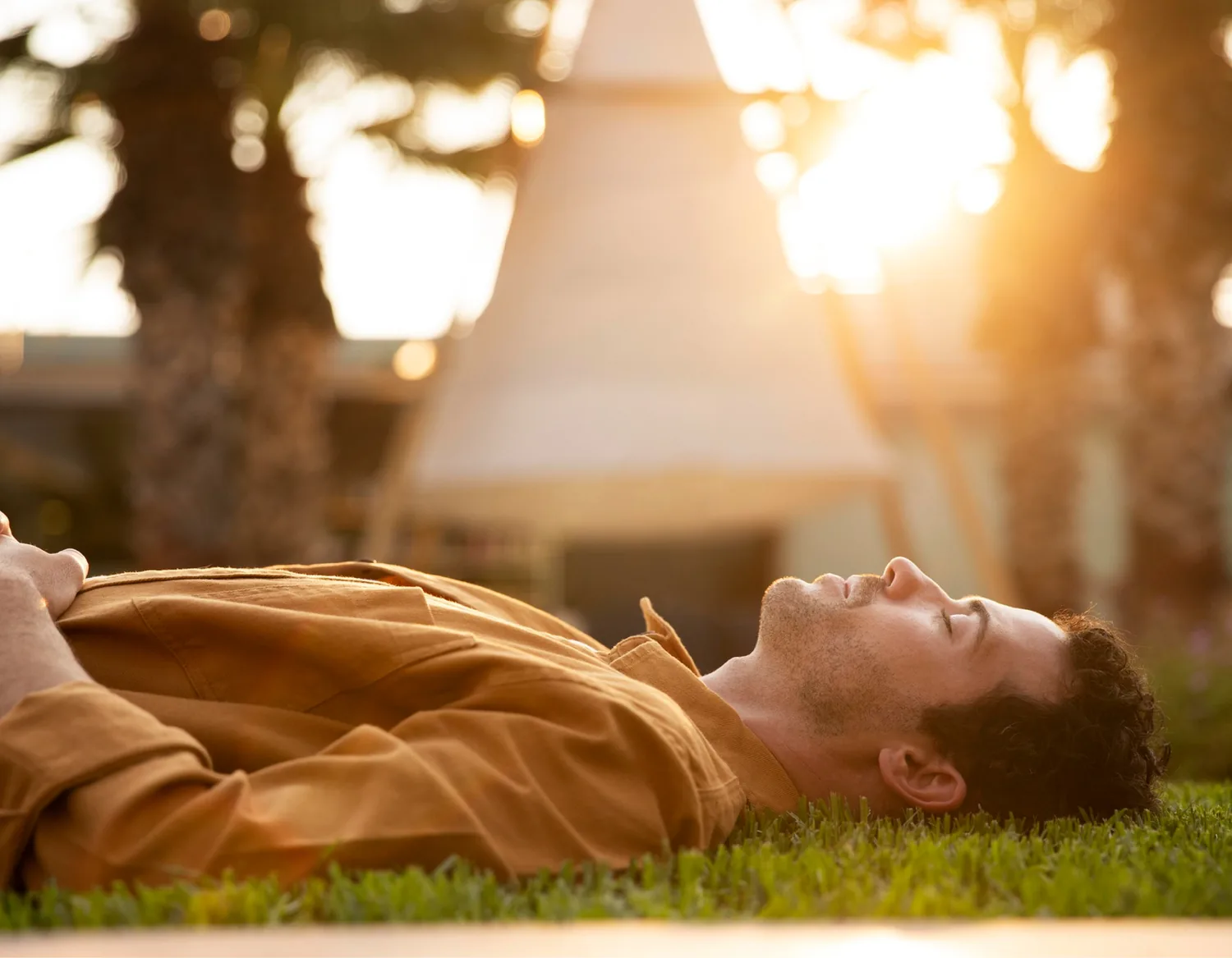
Developed by Jon Kabat-Zinn for MBSR, the body scan brings awareness to physical sensations. It reconnects you with your body and draws you away from anxious thoughts.
Step by step
- Lie on your back or sit comfortably, back straight. Drop your shoulders and close your eyes.
- Start at the top of your head. Slowly bring your attention to each area in turn, observing each part separately: forehead, eyes and eyebrows, jaw and cheeks, throat and the back of the neck, shoulders, upper back, middle back and lower back, chest and heart, belly, pelvic area and sitting bones, thighs, knees, calves, heels, and the soles of your feet and toes.
- For each area, notice without judgement. Is it tense, relaxed or numb? Is it warm or cool? What sensations are present?
- You are not trying to relax. You are noticing. Relaxation happens on its own.
- When you have finished, bring your awareness back to the room around you and open your eyes.
Why it works
Anxiety lives in the thinking mind. By shifting attention to physical sensations, you anchor yourself in the present moment, where anxiety cannot exist.
Tips
- Move slowly through your body. There is no rush.
- If your mind wanders — and it will, probably several times — gently bring it back to the part you were scanning, without judgement.
- You can do a quick two-minute version or a full ten-minute one.
- It works best lying down, but can be done sitting.
Technique 4 — Box breathing
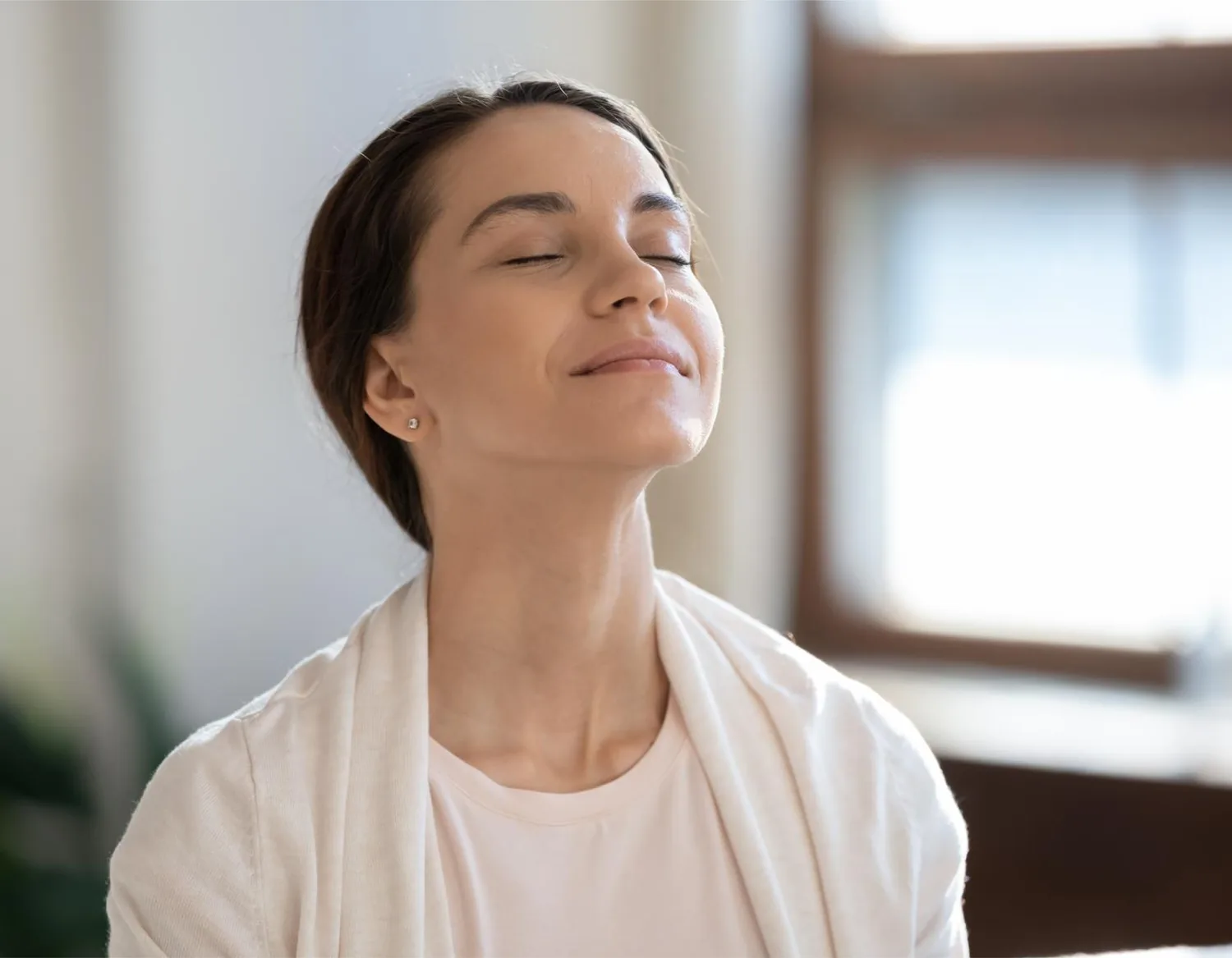
Also called square breathing, this is used by military personnel and first responders to manage stress under pressure. The equal counts create a rhythm that calms both mind and body.
Step by step
- Sit comfortably with your back straight.
- Inhale through your nose for a count of four.
- Hold your breath for a count of four.
- Exhale through your mouth for a count of four.
- Hold empty for a count of four.
- Repeat the cycle five to ten times.
Why it works
The equal rhythm and the hold periods regulate your nervous system. Your brain responds to patterns, and this predictable cycle signals safety and control.
Tips
- Use it when you need immediate calm, such as before a meeting or a presentation.
- Adjust the count to three if four feels too long.
- Focus on making the exhale smooth and complete.
- It is particularly helpful during a panic attack.
Technique 5 — 5-4-3-2-1 sensory grounding
By engaging all five senses, you anchor yourself firmly in the present moment and away from anxious thoughts.

Step by step
- Five things you can see. Look around and name five specific things — not just “a wall”, but “a white wall”, “a green plant”.
- Four things you can touch. Feel the chair, your clothes, the ground. Describe the texture.
- Three things you can hear. Sounds around you — traffic, birds, the air conditioning, your own breathing.
- Two things you can smell. Coffee, fresh air, your own shampoo.
- One thing you can taste. The taste in your mouth, a sip of water, anything at all.
Why it works
Anxiety pulls you into “what if” thoughts about the future. This technique forces your brain to engage with the present through your senses. You cannot be anxious and fully present at the same time.
Tips
- Be specific in your descriptions. It keeps the thinking mind occupied.
- It works anywhere — in the car, at work, in a meeting.
- It is especially powerful during a panic attack or intrusive thoughts.
When to seek further support
These techniques are useful in the moment, and practising them regularly makes them more effective. If anxiety is persistent, interferes with your sleep, work or relationships, or if panic attacks are becoming frequent, speaking to a professional is the right next step.
Our psychologists and psychiatrists in Abu Dhabi and Dubai can help you understand what is driving the anxiety and build a plan that lasts beyond the next five minutes.
Jump into the conversation
Replying to
Leave a Reply